
How to Choose a Kitchen Countertop: What We've Learned After Years of Projects
No single decision in a kitchen renovation generates more questions, more anxiety, or more second-guessing than the countertop. It's the surface you'll touch every day. It's the material that anchors the whole design.
After years of kitchens — dramatic and quiet, bold and restrained — here's what we've actually learned.
Understand What You're Actually Choosing Between
At the category level, most clients are choosing between natural stone — marble, granite, quartzite — and engineered surfaces like quartz. Each has genuine advantages and genuine compromises. There is no objectively correct answer. There is only the right answer for your household, your aesthetic, and your relationship with maintenance.
Marble: The Honest Conversation
Marble is the most debated countertop material in residential design — and usually for the wrong reasons. The concerns around etching and staining are real but manageable. Seal your marble. Use cutting boards. Wipe acid-based liquids quickly. Follow these steps and marble will age into something far more beautiful than it was when it was installed.
The case against marble in a family kitchen is not that it stains. It's that you have to be willing to engage with it differently than you engage with an engineered surface. For clients who want zero maintenance and zero marks, marble is genuinely not the right choice. For clients who want a surface with soul, character, and the kind of depth that no engineered product can replicate — marble is almost always worth it.
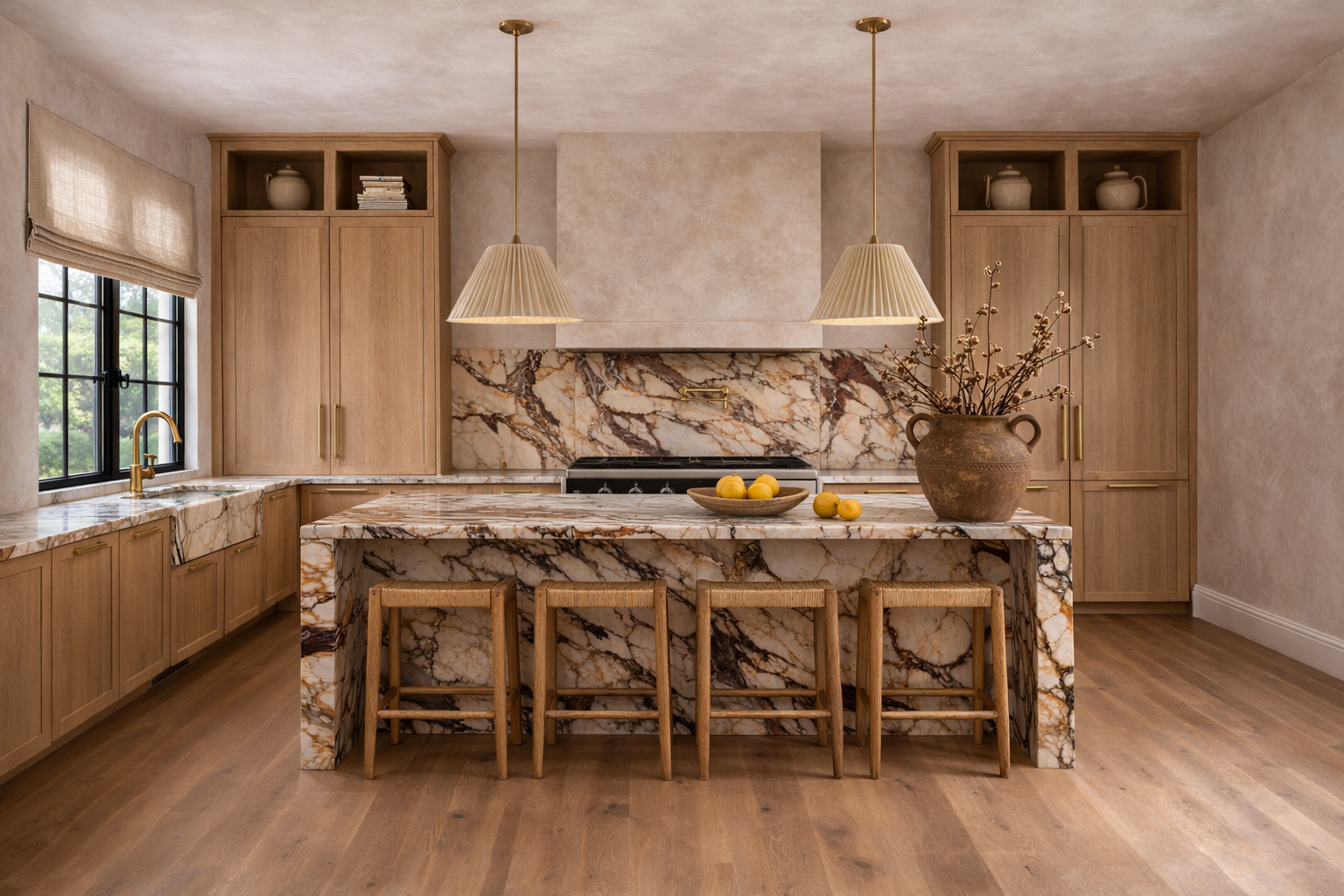
At Milton Estate, we used Calacatta Viola with its deep burgundy veining. Every client who has visited that kitchen and asked about the countertop has left wanting it for their own project. No one has asked about maintenance.
Quartz: Reliable, Consistent, Quietly Confident
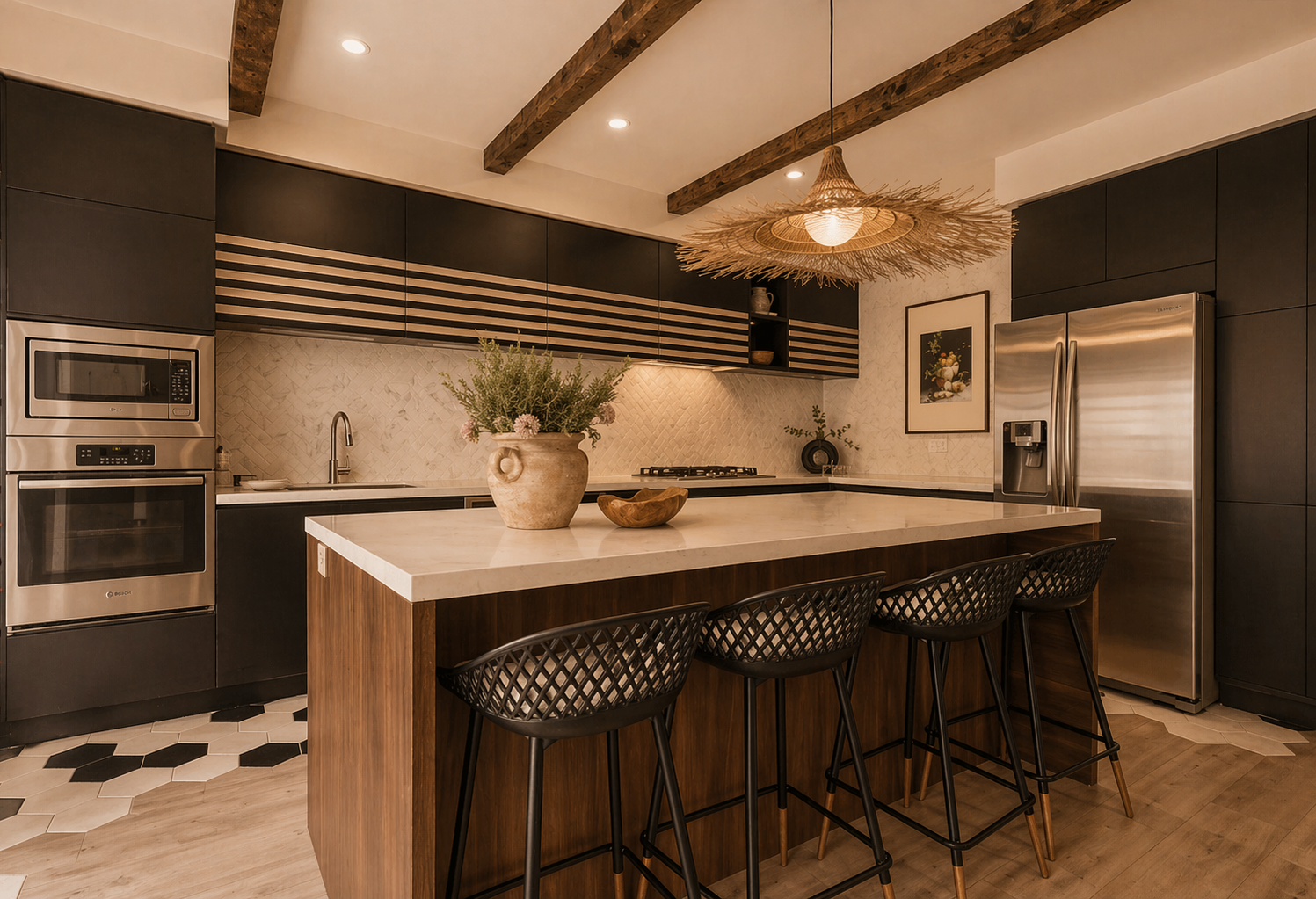
In a different kitchen, we paired a light gray veining quartz countertop with black cabinetry. No drama. Subtle veining that doesn’t demands attention. Just a clean, warm surface that lets the rest of the room — the lighting, the cabinetry and the beams — do the talking.
That's the case for quartz. It performs beautifully in a family kitchen: no sealing, no etching, highly resistant to staining and heat. You know exactly what you're getting, and it will look the same in fifteen years as it does today.
Where quartz falls short of natural stone is depth. It's made to look like stone, but it doesn't carry the geological variation that makes a marble slab unrepeatable. For some kitchens — and some households — that reliability is exactly the point. For others, it's the trade-off they're not willing to make.
What the Backsplash Has to Say About It
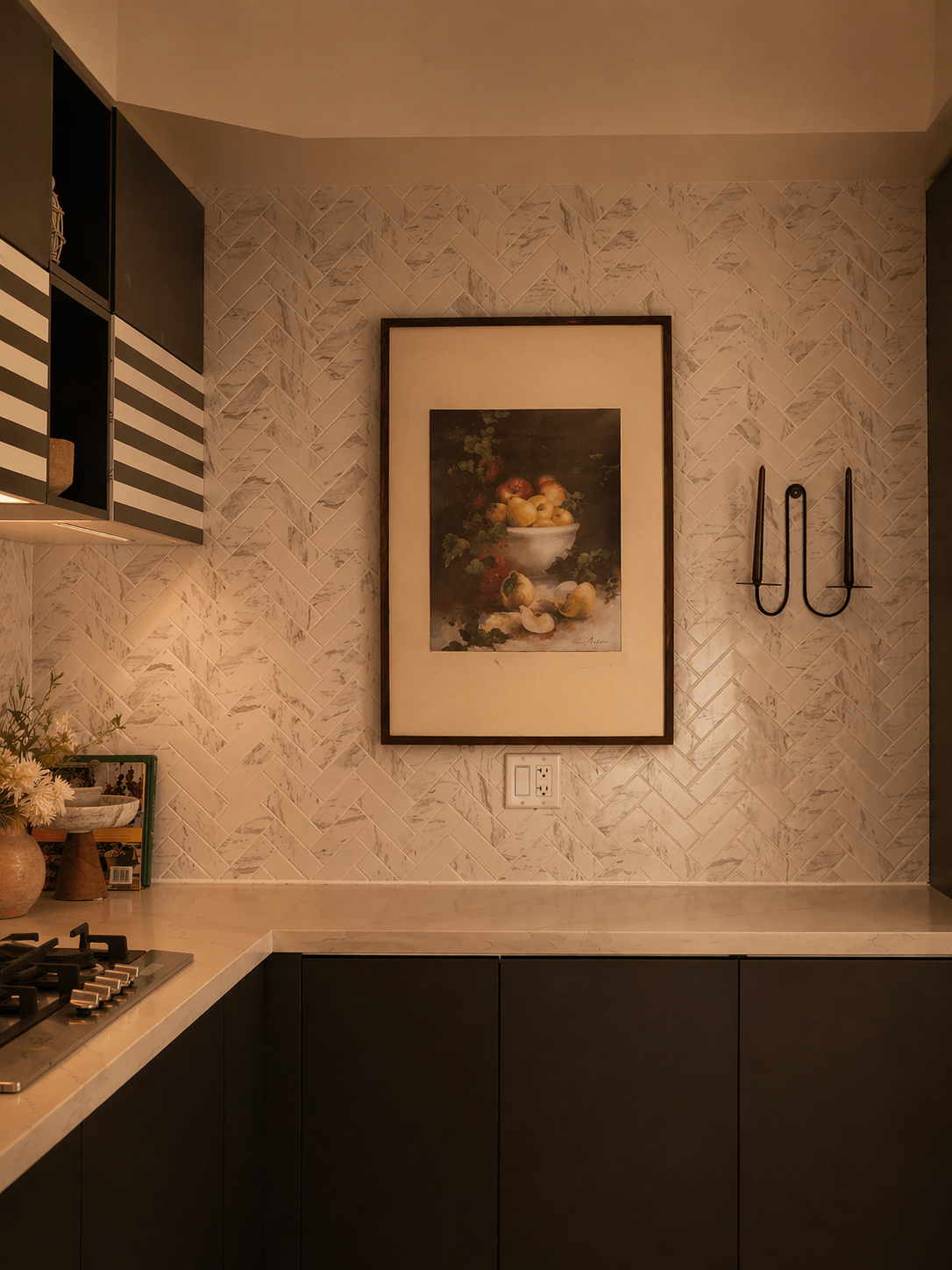
The countertop rarely makes its case alone. In a kitchen with dark cabinetry and warm wood beams overhead, we let a herringbone marble backsplash carry texture and movement, while the countertop stayed calm and supportive underneath. The relationship between the two surfaces is part of the decision — sometimes the backsplash is where the drama lives, and the countertop holds the room steady.
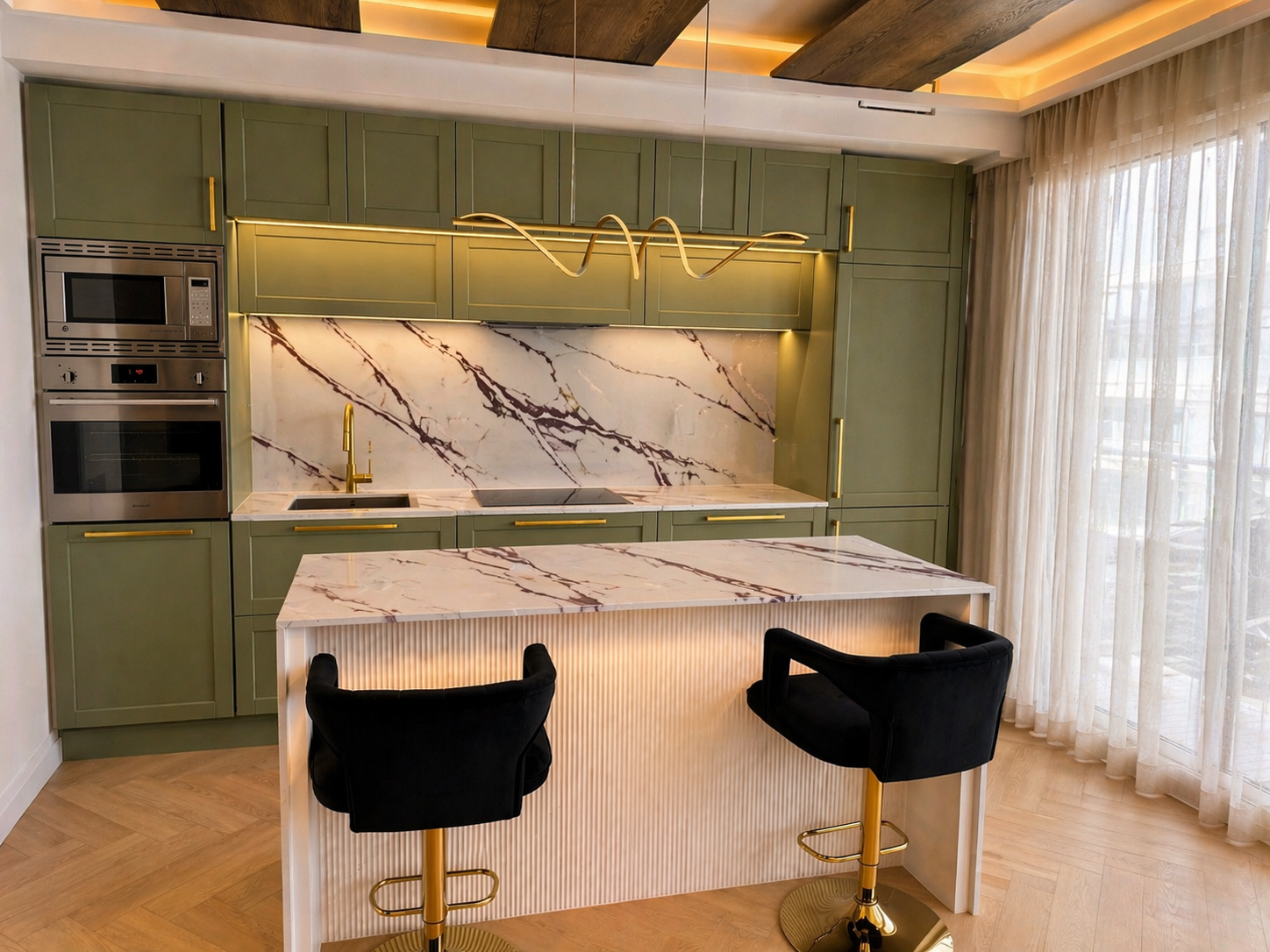
In another kitchen, we let the marble run floor-to-ceiling behind the cooktop and continue straight onto the island — the same dramatic veining doing double duty as backsplash and surface. That's a different kind of statement. Bigger. Bolder. Not for every kitchen, but unforgettable in the right one.
The Decision Framework We Use
When we're helping a client decide, we ask three questions: How do you actually use your kitchen? Are you committed to moderate maintenance in exchange for exceptional beauty? And what is the dominant material language of the rest of the project — does the countertop need to be warm, cool, dramatic, or quiet?
The answers to those three questions usually determine the material within a few minutes of conversation.
→ Planning a kitchen renovation in Ontario? A design consultation is the best place to start. → saivahomes.com/design-consultation
