
How to Design a Kid's Bedroom That Won't Feel Dated in Ten Years
What Makes a Children's Room Timeless
I always say the best kids' rooms are the ones that don't look like kids' rooms.
That might sound counterintuitive. Children's spaces should feel playful, personal, imaginative — of course they should. But there's a difference between a room designed around a child's personality and a room designed around a trend or a character or a colour that will feel wrong in three years. The question I started with was: what does a kid need this space to be in five years? In ten?
After years of designing children's spaces, my rules are simple. Choose a palette that lives within the house's larger language, not outside it. Invest in the architecture — the built-ins, the millwork, the structural decisions — and let the decorative elements be the things that are easy to change. Use materials that age well. And design for the child they're becoming, not only the child they are today.
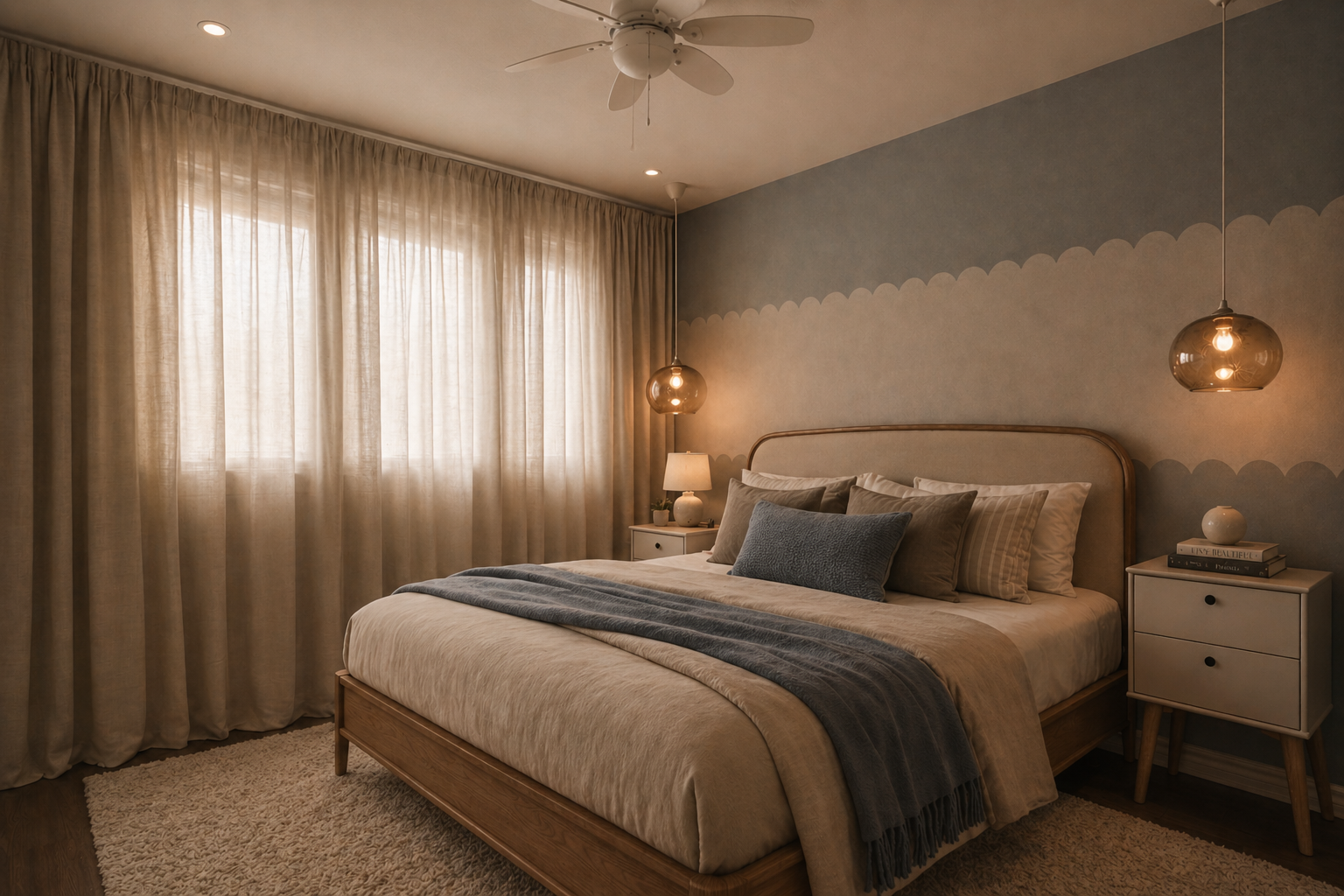
Soft blue and warm tans read as calm and grown-up rather than juvenile — a palette that will move easily from childhood into the teenage years without ever needing to be redone.
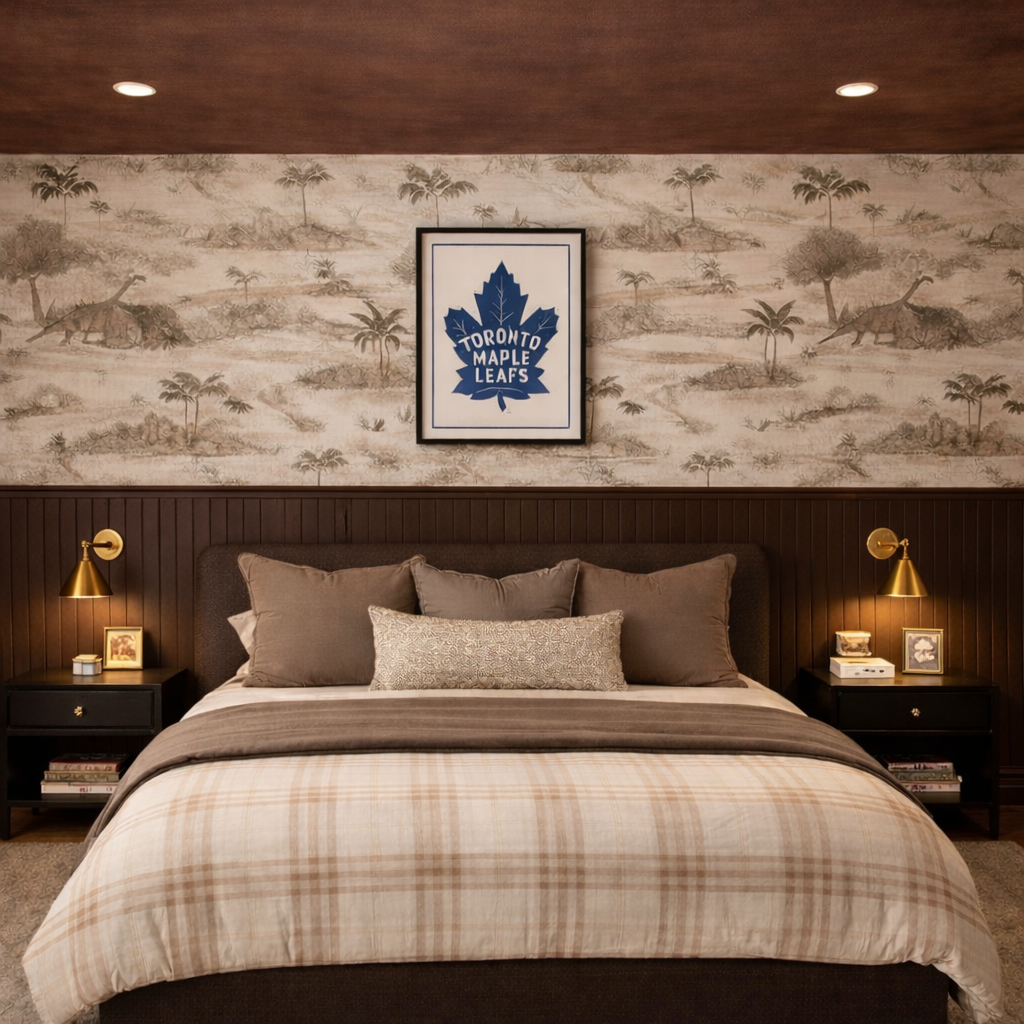
Personal touches don't have to mean playful colours or characters. Here, a favourite team's poster sits comfortably against a sophisticated palette of dark wood panelling and printed wallpaper — proof that a room can feel completely personal without feeling like it was designed for a five-year-old.
“Rooms like these cost more upfront than a quick paint job and flat-pack furniture. They're also the rooms a child will remember and love for their entire childhood — and probably long after.”
Vanshita
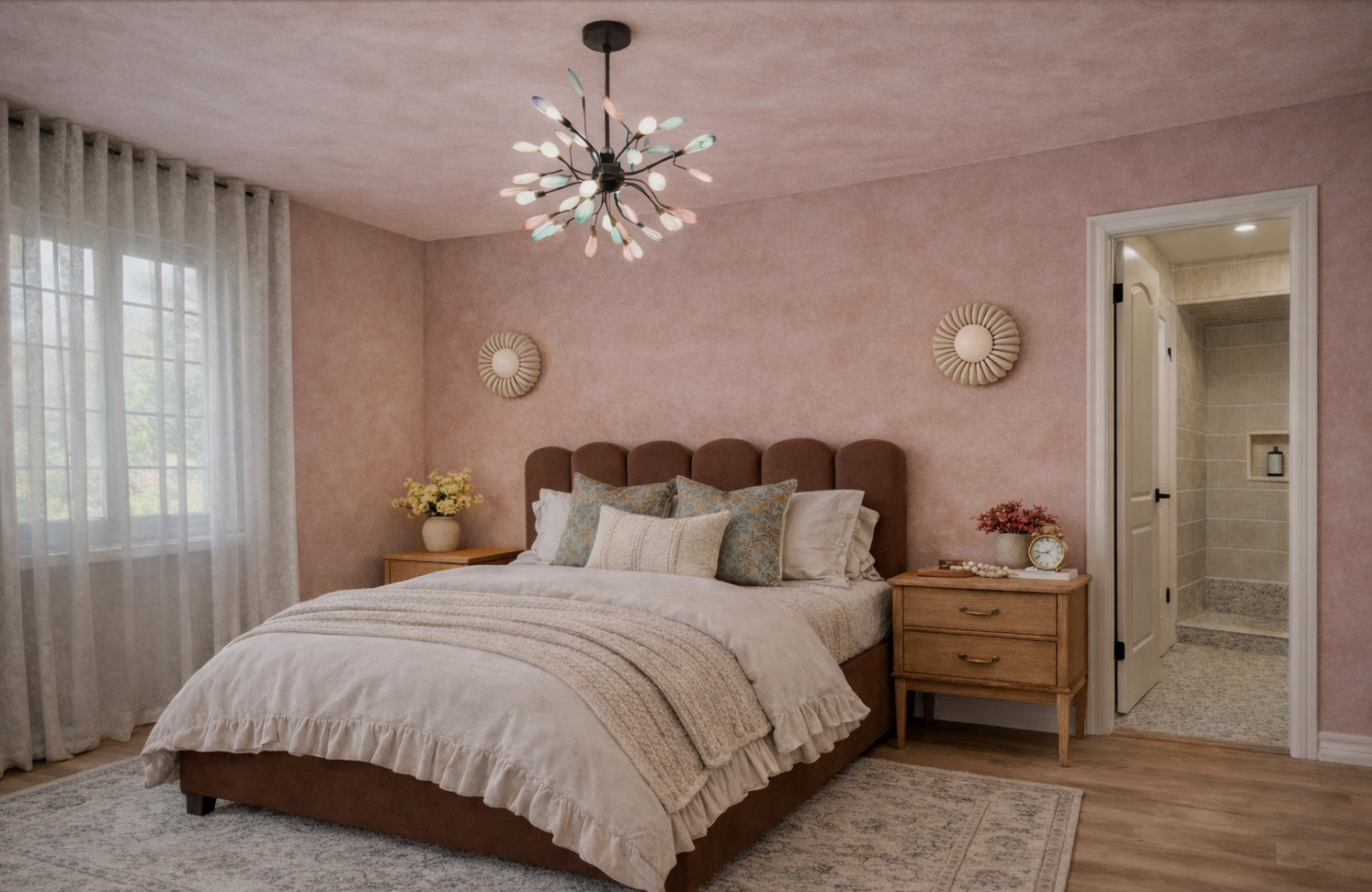
The Brief: Design for Now and for Later
The Milton Estate Girl’s Bedroom
For designing the girl’s bedroom the question I started with was: what does she need this space to be in five years? In ten? She was eight when we designed it. By the time she's a teenager, she'll want a room that feels mature and personal — not a room that was clearly designed for a younger version of herself. By the time she's eighteen, she might be bringing friends back and wanting the space to feel almost like a small apartment.
This doesn't mean designing a boring room now. It means making choices with longevity built in.
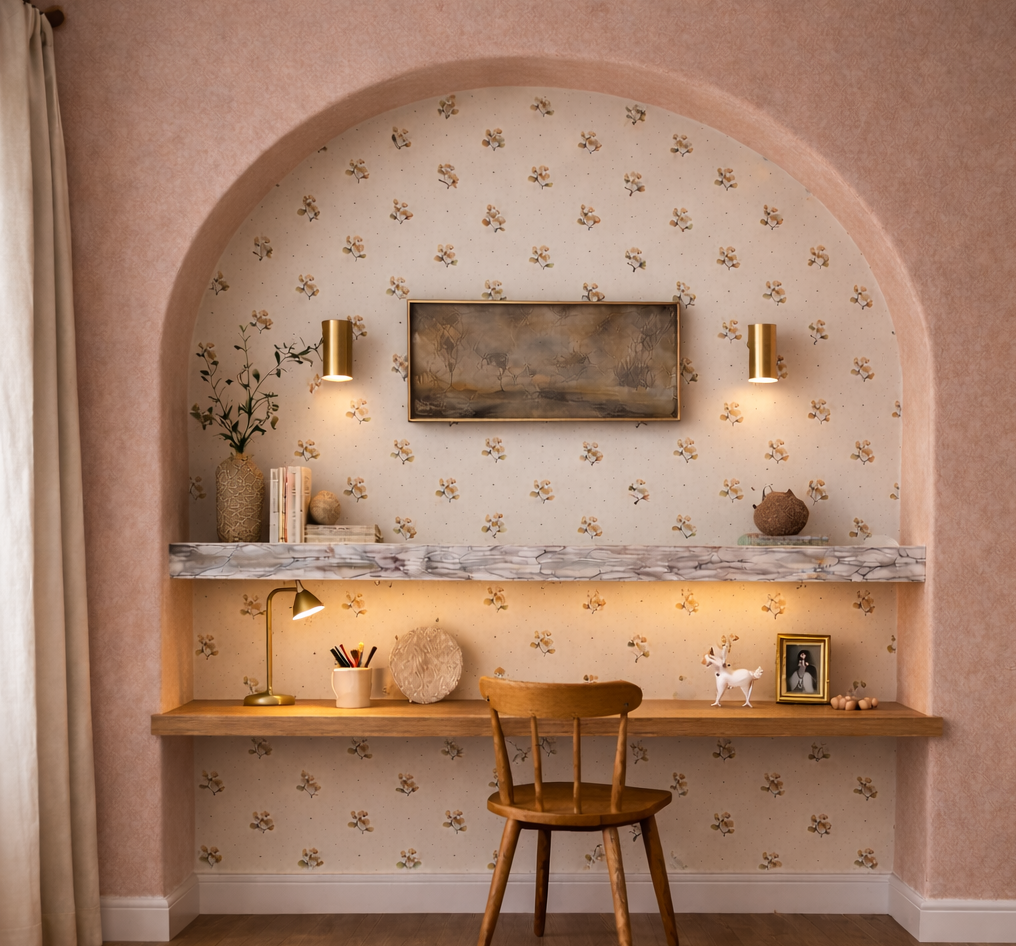
The Custom Arched Workspace
The most important structural decision in this room was the custom arched workspace built into the wall. It gives the room purpose and architecture — a place to study, to create, to feel like the space is genuinely hers.
We built it as furniture-grade millwork, not as something that reads as children's furniture. The arch is a detail that will feel as relevant to a seventeen-year-old as it does to an eight-year-old. The proportions were drawn to work for both a small child sitting down and a teenager.
This is the kind of investment that pays off. In a rental, you fill a room. In your own home, you build for it.
The Wallpaper Decision
The floral wallpaper was a conversation. Florals in a children's room can tip quickly into something that dates itself — too sweet, too small-scale, too specifically childlike.
We chose a large-scale botanical in warm dusty tones — not pink, not pastel, but earthy and rich. The scale means it reads as texture from a distance rather than pattern. And the palette places it firmly in the same world as the rest of the house.
Against the arch and the millwork, the wallpaper adds personality without dominating. It wraps the room in warmth while the architecture gives it structure. They balance each other.
