
What to Expect When Building a Custom Home in Ontario: A 2026 Guide
Building a custom home in Ontario is one of the most significant decisions — financially and personally — that a family will make. It is also one of the most poorly understood processes. Most people approach it with a general sense that it takes time and costs money, and not much more than that.
This guide covers what you should actually know before you begin: the realistic timeline, the key phases, how to budget honestly, and why the firm you choose at the beginning shapes everything that follows.
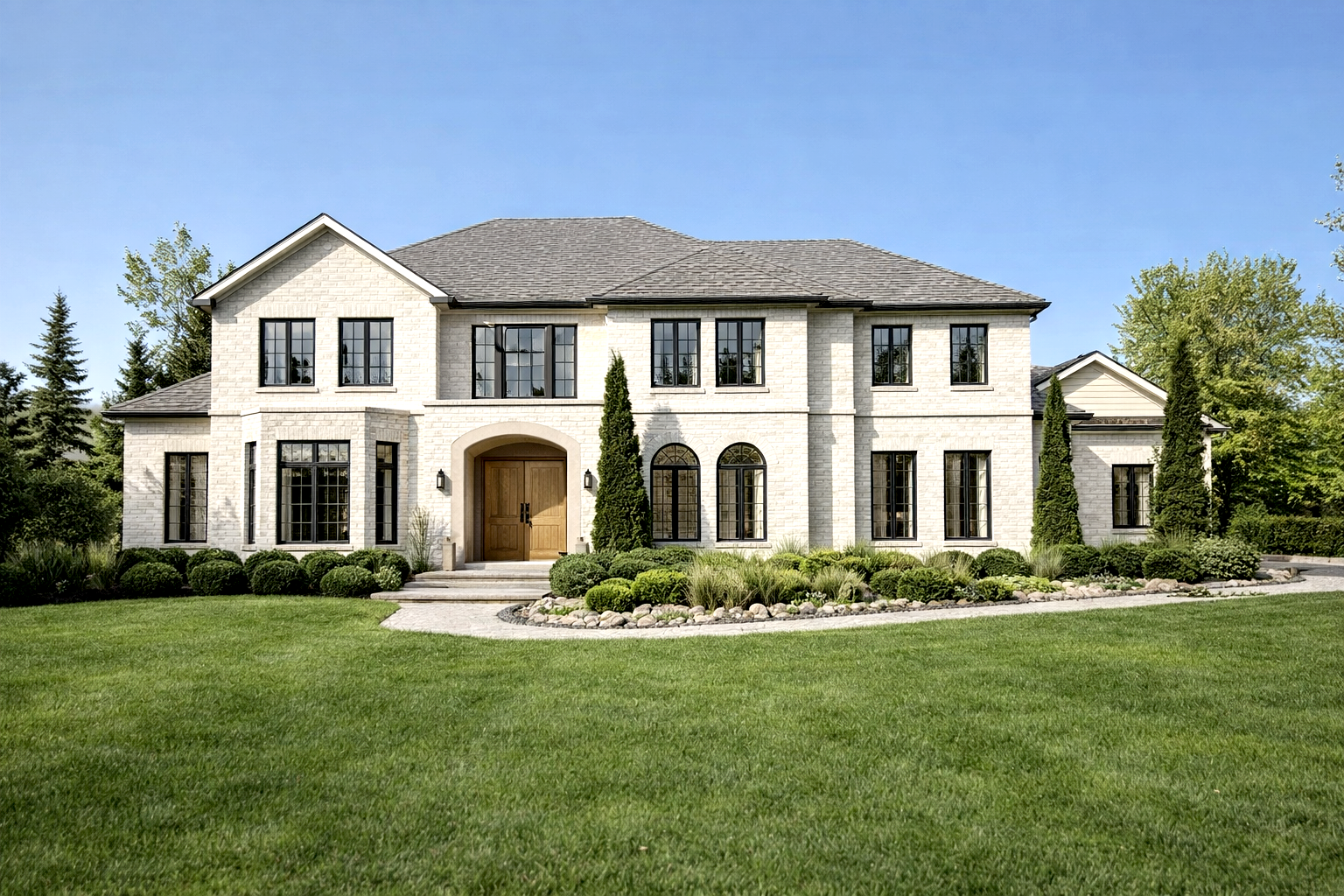
“The design phase is where problems are solved inexpensively. Don't rush it”
Vanshita
Realistic Timelines
A full custom home build in Ontario — from initial design consultation through to occupancy — typically takes between 18 and 30 months depending on scope, site conditions, and municipality. Breaking this down:
Design phase: 3–6 months. This covers initial consultation, space planning, architectural drawings, interior design development, material selection, and construction documentation. This phase should not be rushed. The design phase is where problems are solved inexpensively, before they become expensive mistakes in the field.
Permitting: 2–6 months. Timelines vary significantly by municipality. Guelph, Milton, Oakville, and Toronto all have different processing times and requirements. Factor this into your overall timeline early.
Construction: 12–18 months. Again, scope and complexity drive this number. A straightforward custom home on a clear lot builds faster than a complex multi-storey with a finished lower level, extensive millwork, and a pool.
How Custom Home Budgets Actually Work
The first question almost every client asks is: how much per square foot? It's the wrong question — or at least, it's an incomplete one. Cost per square foot in Ontario custom home building ranges from around $350 to $700+ depending on finish level, and that spread is large enough to be nearly meaningless without context.
A more useful framing: what is the total project budget, and what level of finish does that budget support at the square footage you're targeting? Budget-to-finish-level-to-size is the triangle that every custom home lives in. Moving one side always moves the others.
At Saiva Homes, we discuss budget honestly in the first conversation — not to qualify clients, but because design decisions made without budget context are design decisions that will have to be undone later. That's expensive for everyone.
Why the Firm You Choose at the Beginning Matters So Much
In a design-build model, the firm you choose at the beginning of the process is responsible for the entire outcome. This is different from hiring an architect whose drawings are then executed by a contractor who had no involvement in the design. In design-build, there is continuity from the first conversation to the moment you receive your keys.
Choose a firm whose built work you genuinely love — not just whose portfolio looks beautiful online. Visit completed projects if you can. Talk to past clients. Understand how they communicate during the build, not just how they present during the sales process. A 20-month relationship requires trust.
Questions to Ask Before You Begin
Have you built in this municipality before, and how long did permitting take on your last project in a similar location? What does your design process look like, and how are design and construction decisions integrated?How do you handle scope changes during the build?
