
The Milton Estate Kitchen: Why We Chose Whitewashed Oak, Calacata Viola, and Limewash
The kitchen is always the room I spend the most time on. Not because it's the most complicated — though it often is — but because it's the room that shapes how a home feels to live in. Get it right and the whole house follows. Get it wrong and no amount of beautiful furniture will save it.
At Milton Estate, I knew from the first site visit exactly what this kitchen needed to be. It had to anchor the home. And it had to be designed for a family that actually cooks, gathers, and lives in their kitchen every day.
Here's how we made every major decision, and why.
1. Why White Washed Oak for the Millwork
White washed oak was never really a question for this project. The family had a warmth to them — they wanted a home that felt grounded and organic, not trend-driven. It's warm without being rustic. It has depth and grain that ages beautifully. And it sits differently in a kitchen than painted cabinetry — it adds weight and presence in a way that feels more like furniture than joinery. The millwork runs floor to ceiling on the perimeter and the island. We used a matte finish throughout — no lacquer, no high gloss. The goal was something that would improve with time, not fight against it.
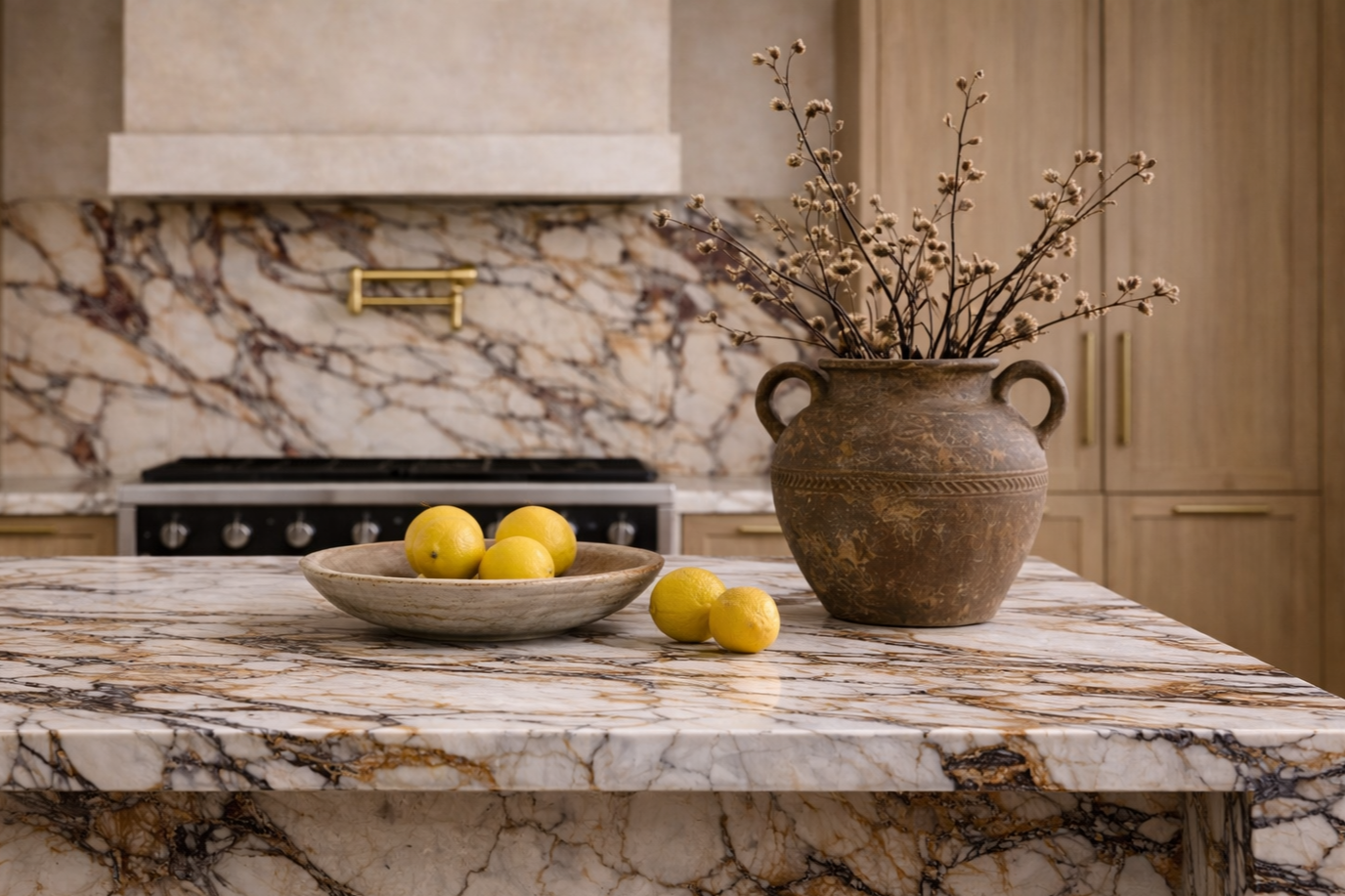
2. Why Calacata Viola for the Countertops
This was the decision that surprised the clients most — and the one they now tell everyone about. Calacata Viola is a marble with deep burgundy veining running through white and cream. In context — against millwork and a limewash ceiling — it becomes something else entirely. Grounded. Unexpected. Deeply personal. I knew the countertop would carry the drama the space needed without competing with the warmth of the wood. Marble in a kitchen is always a conversation about practicality. My answer is always the same: seal it well, use it confidently, and understand that the patina it develops over years is part of the design intention. Surfaces that age are surfaces that feel lived in. That's a good thing.
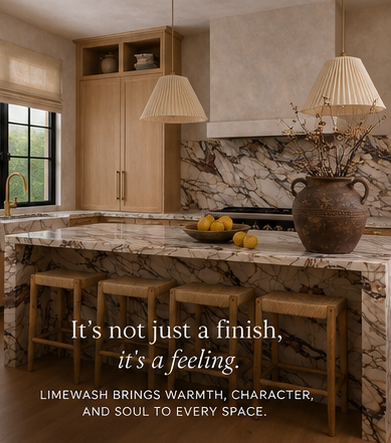
3. Why Limewash on the Walls and Ceiling
Limewash was the detail that tied everything together. It went on the walls and — the decision I pushed hardest for — the ceiling. It gives the surface texture and movement, making the kitchen feel taller and warmer simultaneously. The tone we used shifts between warm sand and pale clay depending on the light. In the mornings, it reads almost white. In the evenings, with the warm pendants on, it turns golden. It's one of those details that nobody can quite name but everyone notices.
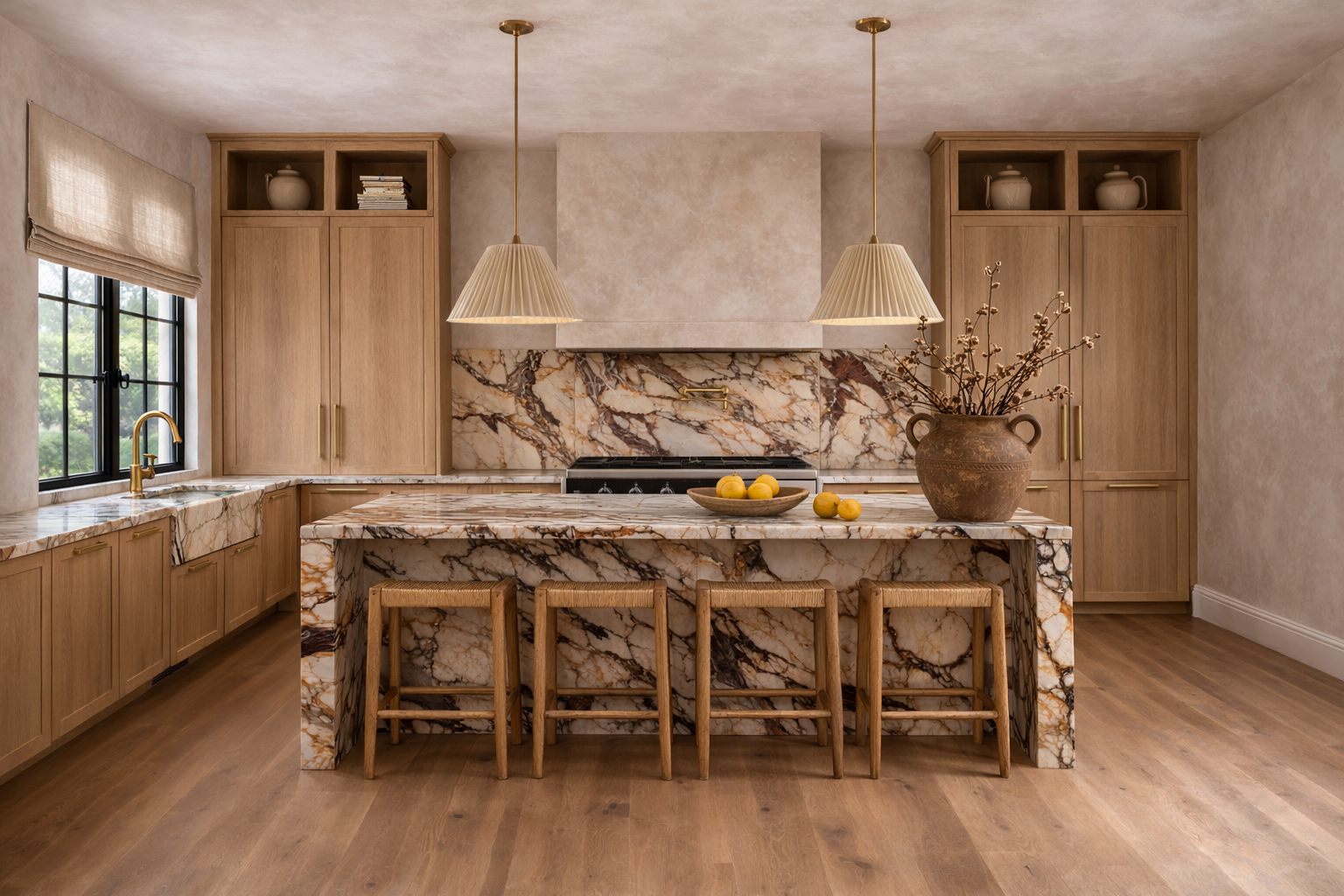
“Every material was chosen to age well — to look better in ten years than it does today.”
Vanshita
The Result
The kitchen at Milton Estate is the room I keep coming back to, not because it's the most decorated room but because every element is working together with complete intention.
